
PICRAH 4.0 – Adaptive Robotics and Federated Learning
Intelligent and cyber-secure platform for adaptive optimization in simulated operation of heterogeneous autonomous robots.
Intelligent and cyber-secure platform for adaptive optimization in simulated operation of heterogeneous autonomous robots
- Funded by
- CDTI – Spain, national
- Institution
- Ceit Research Center
- Role
- Research collaborator
- Date
- Joined in November 2026
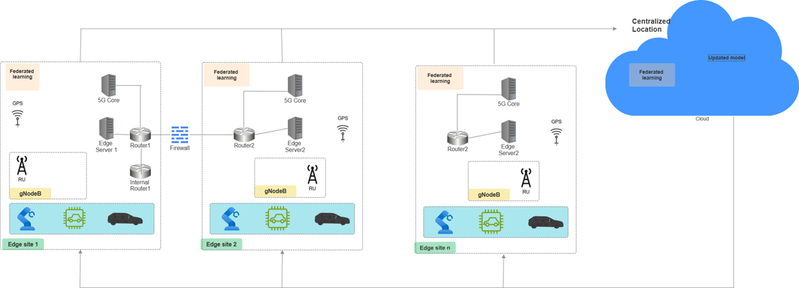
So far I have contributed the state of the art on federated learning applied to autonomous robots through adaptive optimization in the simulated operation of heterogeneous autonomous robots. I have also contributed to data-cybersecurity protocols for network monitoring and traffic management, and developed unsupervised and supervised machine-learning algorithms to detect network-traffic anomalies, including an intrusion detection system (IDS) based on spectral clustering that detects four attack types in industrial-robot network traffic.
I co-authored the article “Anomaly Detection Using Machine Learning for Robotics Environments on 5G Networks” in the journal Technologies, which describes the deployed architecture and the anomaly-detection models with process data. In addition, I have developed AI-powered intrusion detection for MQTT-based IoT networks.
More information about my participation in this project: projects on LinkedIn. Related project: ADILAGUN – distributed AI for industry.
References
- Oses, M.D., Paz, A.D., Figueroa-Lorenzo, S., Arrizabalaga, S. and Rodriguez-Jorge, R., 2026. Anomaly Detection Using Machine Learning for Robotics Environments on 5G Networks. Technologies.